Why Delhi-NCR Still Makes Sense for Homebuyers and Investors in 2026

Why Delhi-NCR Still Makes Sense for Homebuyers and Investors in 2026
Delhi-NCR remains one of India's most closely watched property markets, and for good reason. Few regions offer the same spread of choice - metro-linked apartments in Noida, entry-priced builder floors in Greater Noida, premium high-rises in Gurugram, and centrally located homes in New Delhi - all within a single, connected micro-market. But that same variety is exactly what trips buyers up. A budget that works beautifully in Sector 150, Noida can feel completely out of place in Sector 65, Gurugram, and a "ready to move" tag means something different depending on which developer used it.
This guide walks through what actually matters when you're buying residential, commercial, or plot property anywhere in Delhi-NCR right now - how the four major markets differ, what a genuine cost sheet should include, which documents protect you, and the questions that separate a serious advisor from someone just trying to close a deal. Whether you're a first-time homebuyer, an NRI investor, or scouting commercial space for a business, the goal here is the same one Propvider works toward with every listing: helping you buy right, once.
Understanding the Three Property Categories
Before comparing cities, it helps to be clear on what you're actually shopping for, because the buying process, financing options, and risk profile differ meaningfully across the three broad categories.
Residential Properties
This covers apartments, builder floors, villas, and independent houses. It's the largest and most liquid segment of the NCR market, spanning everything from affordable 1 BHK units in Greater Noida's outer sectors to ultra-luxury penthouses in Gurugram's Golf Course Road corridor. Residential purchases are typically financed through home loans, which means lenders will scrutinize the project's approvals, the builder's track record, and your own eligibility before disbursing funds.
Commercial Properties
Offices, retail shops, and mixed-use commercial spaces fall here. Commercial real estate usually carries a different tax treatment (GST applies on under-construction commercial units, for instance), different loan products, and a valuation approach driven more by rental yield and footfall than by comparable sale prices. If you're buying commercial space as an investment rather than for self-use, rental yield calculations matter far more than they do for a home purchase.
Plots and Land Parcels
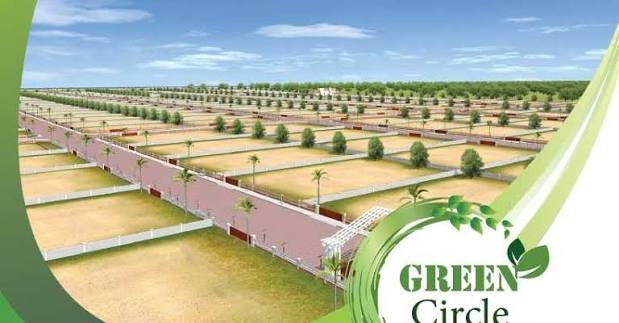
Residential and agricultural plots appeal to buyers who want to build custom homes or hold land as a long-term asset. Plots carry their own due-diligence checklist - land-use classification, conversion status if the land was agricultural, and clear chain-of-title going back several transactions - that differs from what you'd check on a built apartment.
Knowing which category you're in shapes almost every other decision in this guide, from the paperwork you should ask for to how you calculate whether a price is fair.
A City-by-City Look at Delhi-NCR
Delhi-NCR isn't one market - it's four or five distinct ones stitched together by expressways and metro corridors. Here's how the major markets typically compare.
Noida
Noida sits at the more mature end of the NCR spectrum, with pricing generally in the range of ₹6,500 to ₹14,000 per sq. ft. depending on the sector and how close it is to a metro line or the expressway. Sectors along the Noida-Greater Noida Expressway and near Aqua Line metro stations command a premium because of the daily commute they save residents working in Delhi or Noida's own IT and corporate hubs. Noida works well for buyers who want established social infrastructure - schools, hospitals, malls - already in place, rather than betting on infrastructure that's still being built.
Greater Noida
Greater Noida is where a lot of first-time buyers start, with prices typically between ₹4,200 and ₹7,500 per sq. ft. - meaningfully lower than Noida proper, while still offering expressway connectivity. The trade-off is that some of Greater Noida's sectors are still filling in - social infrastructure, retail, and even some metro extensions are works in progress. That's precisely why it's attracted so much delivered stock in the affordable-to-mid segment: builders can price aggressively here and still turn a margin, and buyers get a lower entry point into an NCR address. The flip side is that resale appreciation depends heavily on which specific sector you pick, since not all of Greater Noida is developing at the same pace.
Gurugram
Gurugram is the premium end of Delhi-NCR by a wide margin, with prices ranging from around ₹9,000 to ₹32,000 per sq. ft. Corporate campuses, an established expat and executive population, and some of the region's most polished retail and hospitality options all support that premium. If your budget allows it, Gurugram tends to hold value well and offers the strongest rental demand in NCR, particularly near Cyber City, Golf Course Road, and the newer Dwarka Expressway sectors. It's also where you'll find the widest gap between advertised base rates and actual all-in costs, since premium projects often layer on club membership charges, higher maintenance deposits, and preferential-location charges (PLC) that a quick brochure scan won't reveal.
New Delhi
Central Delhi properties typically run ₹7,000 to ₹18,000 per sq. ft., with the appeal being straightforward: nothing beats being centrally located relative to government offices, established markets, and Delhi's older, well-connected neighborhoods. Inventory here tends to be resale rather than fresh under-construction stock, so due diligence shifts more toward verifying an unbroken chain of title and confirming there's no litigation attached to the property, since Delhi has a longer history of ownership disputes than the newer NCR satellite cities.
What a Real Cost Sheet Should Include
One of the most common ways buyers get caught off guard isn't the base price - it's everything layered on top of it. A genuinely complete cost sheet, the kind you should insist on before any site visit, typically breaks down into:
- Base sale price, calculated on the actual super built-up or carpet area, whichever the project's documentation specifies.
- Preferential Location Charges (PLC) for corner units, park-facing units, or specific floors - often 2-8% of the base price.
- Goods and Services Tax (GST), applicable on under-construction property (currently 5% for non-affordable housing, 1% for affordable housing categories, and 12% on most commercial units, though rates are always worth reconfirming at the time of purchase).
- Registration and stamp duty, which varies by state - Uttar Pradesh, Haryana, and Delhi each set their own rates, and they can differ meaningfully for the same property value.
- Club membership and maintenance deposits, often quoted as a lump sum due at possession.
- Electricity and water connection charges, sometimes bundled, sometimes billed separately at handover.
- Parking charges, particularly for covered or additional parking slots beyond what's included by default.
If an advisor or builder can't produce a document that itemizes each of these before you've committed any money, that's a signal to slow down. A legitimate seller has no reason to hide the full cost picture - the only parties who benefit from vague pricing are the ones hoping you won't notice the gap between the number in the ad and the number on the final agreement.
RERA, Title, and the Documentation That Actually Protects You
The Real Estate (Regulation and Development) Act exists specifically because the sector had a long history of delayed possessions and diverted funds. Every state-registered project should carry a RERA registration number, and that number is checkable on the relevant state RERA portal - Uttar Pradesh RERA for Noida and Greater Noida projects, Haryana RERA for Gurugram, and Delhi's own RERA authority for the capital.
Beyond RERA registration itself, a thorough documentation check for a residential purchase typically covers:
- Title deed verification, confirming the seller or developer actually holds clear, marketable title to the land.
- Encumbrance certificate, confirming the property isn't mortgaged or under any legal claim you're not aware of.
- Approved building plan and occupancy certificate (OC) for ready-to-move properties, or the sanctioned layout plan for under-construction ones.
- Completion certificate, distinct from the OC, confirming construction matches the sanctioned plan.
- No-objection certificates (NOCs) from relevant authorities - fire safety, environment clearance for larger projects, and airport authority clearance if the project falls under flight-path height restrictions, which is a real consideration near parts of Gurugram and Delhi.
For plots specifically, add land-use certification (confirming the land is zoned for the use you intend) and, if the land was previously agricultural, proof that it has been legally converted for residential or commercial use. Skipping this step is one of the most common - and most expensive - mistakes plot buyers make in the outer stretches of Greater Noida and Gurugram.
Financing: What Lenders Actually Look At
Loan eligibility isn't just about your income - it's a combination of factors that most first-time buyers underestimate. Banks and housing finance companies typically evaluate:
- Income stability, with salaried applicants generally finding the process faster than self-employed applicants, who need more documentation to establish consistent earnings.
- Existing debt obligations, since your total EMI outflow (including the new home loan) is usually capped at a percentage of monthly income - commonly referenced as the debt-to-income ratio.
- Credit history, where a strong credit score can meaningfully improve the interest rate you're offered, not just whether you qualify at all.
- The project's own approval status with lenders, since some banks maintain approved-project lists and will process loans faster (sometimes with better rates) for projects that are already on that list.
It's worth getting a loan eligibility estimate before you fall in love with a specific unit, not after. A pre-approved sense of your borrowing capacity keeps the property search focused on what you can actually afford, and it gives you real negotiating leverage with a seller, since you can move faster than a buyer who's still sorting out financing.
End-Use Versus Investment: Two Different Decisions
Buyers sometimes evaluate every property through the same lens, whether they're planning to live there or simply hold it for appreciation and rental income. The two goals often pull in different directions.
If you're buying to live in the property, prioritize proximity to your workplace, school options if you have children, and the quality of everyday infrastructure - reliable power backup, water supply, and a management association that actually maintains common areas. A slightly older, established sector with all of this already working often beats a newer, cheaper sector where you're waiting for amenities to catch up.
If you're buying purely as an investment, rental yield and appreciation potential move to the top of the list. Gurugram and established Noida sectors near metro stations typically offer the strongest rental demand, since that's where the working population that actually pays rent tends to concentrate. Greater Noida's newer sectors can offer sharper capital appreciation from a lower base, but with more uncertainty around the timeline, since appreciation there is tied closely to how quickly planned infrastructure - metro extensions, commercial hubs, social amenities - actually gets delivered.
Red Flags Worth Walking Away From
Some warning signs are worth treating as deal-breakers rather than negotiation points:
- A project with no RERA registration number, or one that can't be verified on the state RERA portal.
- A seller or agent who's reluctant to share a written, itemized cost sheet before a site visit.
- Construction that has stalled for an extended period with no clear, documented reason and revised timeline.
- Title documents that show gaps, or a chain of ownership that doesn't add up cleanly.
- Heavy pressure to book "before the price goes up tomorrow" without giving you time to verify anything.
None of these guarantee a project is fraudulent, but each one is a reason to slow down, ask harder questions, and get an independent opinion before signing anything or transferring any token amount.
How to Shortlist Smart Instead of Visiting Forty Projects
The instinct when starting a property search is to see as many options as possible. In practice, that usually just leads to decision fatigue and comparing projects you never should have looked at side by side. A tighter process tends to work better:
- Fix the non-negotiables first - budget ceiling, loan eligibility, target possession timeline, and the one or two localities that actually work for your commute or lifestyle.
- Narrow to a genuine shortlist of two or three, each with a full cost sheet in hand before you schedule a single site visit.
- Visit with a checklist, not just a feeling - construction quality, actual (not brochure) views from the unit, water pressure, and how the common areas are maintained in projects that are already occupied.
- Get the paperwork reviewed before any token payment, ideally by someone whose job is to catch problems, not just to close the sale.
This is deliberately close to how Propvider structures its own advisory process - a requirement call to understand your non-negotiables, a shortlist of three (never more), site visits scheduled the same day so you can compare two projects in one trip, and a paperwork stage where allotment terms are reviewed and unnecessary charges get challenged rather than accepted at face value.
Buying From Abroad: What NRI Buyers Should Plan For
A meaningful share of Delhi-NCR's demand, particularly in Gurugram and established Noida sectors, comes from Non-Resident Indians buying either for eventual relocation or as a long-term investment back home. The fundamentals covered above still apply, but a few things need extra attention when you're not physically present for most of the process.
- Power of Attorney (PoA) arrangements need to be drafted carefully and typically notarized or apostilled depending on your country of residence, since a poorly worded PoA can create complications at registration.
- Repatriation rules under FEMA govern how sale proceeds can eventually be moved back out of India, so it's worth understanding these before you buy, not when you're ready to sell.
- Video site visits have become a genuinely reliable substitute for an in-person walkthrough, provided whoever is conducting the walkthrough is willing to show construction quality up close, not just a polished sample flat.
- NRE/NRO account structuring for payments matters for both compliance and for how smoothly the paperwork moves at your bank's end - loan disbursement and repatriation both depend on which account type funds moved through.
None of this should meaningfully slow down a purchase if it's planned for upfront. Where NRI buyers usually run into trouble is assuming a local representative can handle everything informally without proper documentation - that's exactly where disputes tend to surface years later.
Frequently Asked Questions
Is it safe to buy an under-construction property in Delhi-NCR?
It can be, provided the project is RERA-registered, the builder has a track record of delivering previous phases on time, and your payment schedule is tied to actual construction milestones rather than a flat calendar-based plan. RERA registration specifically requires builders to deposit a portion of collected funds into an escrow account earmarked for that project's construction, which reduces (though doesn't eliminate) the risk of funds being diverted elsewhere.
How much should I budget above the quoted price?
As a rough planning figure, buyers commonly end up paying an additional 8-15% over the base price once GST, registration and stamp duty, PLC (where applicable), and club or maintenance deposits are included - though this varies by state and project, which is exactly why a full itemized cost sheet matters more than the headline number.
What's the difference between carpet area and super built-up area?
Carpet area is the actual usable floor space within your unit's walls. Super built-up area adds a proportional share of common areas - lobbies, staircases, corridors - on top of that. RERA now requires builders to quote pricing based on carpet area specifically, which has made comparisons across projects considerably more transparent than they used to be.
Should I buy in a sector that's still developing, or one that's already established?
It depends on your priority. Established sectors carry a price premium but remove the uncertainty around when promised infrastructure will actually arrive. Developing sectors offer a lower entry price and higher appreciation potential, but that potential is only realized if the surrounding infrastructure gets delivered on the timeline you're expecting - which is worth researching independently rather than taking on a builder's word alone.

Bringing It Together
Delhi-NCR's size is its biggest advantage and its biggest trap. There genuinely is a right property at the right price for almost any budget and timeline across Noida, Greater Noida, Gurugram, and New Delhi - but finding it means resisting the pressure to decide quickly, insisting on documentation before emotion, and working with someone whose incentives are aligned with your outcome rather than with closing the nearest available deal.
If you're currently narrowing down where to buy, the fastest way to move forward productively is to get specific: your budget, your preferred city or two, and your possession timeline. From there, a proper shortlist - with real cost sheets, verified documentation, and honest answers on both the upside and the risk - is far more useful than a long list of brochures. That's the approach Propvider takes with every buyer, across residential, commercial, and plot categories, in every major NCR market it covers.